Hey everyone!
For those that follow the blog, you'll know that all of October we've been talking about your shingle roof. Without dipping into stuff we're all sure you already know, we've been trying to educate our people about what we see when you call us to give an estimate on your roof. After all, you don't really need us to just tell you the obvious.
This post is meant as a nice wrap-up to it all. Firstly, we answer general questions posted through our Facebook page, our Twitter account, or comments here on the blog. If you have any questions about your home in specific, call us at 888-382-2001 and have one of our trained and experienced technicians come out to your home for a free estimate, where you can ask them anything you want.
Remember that your roof requires seasonal maintenance every few months. In the summer and spring, you have to watch out for heat and rain. In autumn and winter, you have to take care for falling leaves, snow, and other cold-related issues - especially ice dams. Remember to keep your attic at a controlled, even temperature through the use of attic vents and fans.
Your gutters don't exist independently either, requiring periodic cleanings and checks on their general structure to see that they're not a liability to your home.
There are many ways to protect your roof, and no one is more qualified to tell you about those options than a licensed roofer. So call us already!
Showing posts with label mold. Show all posts
Showing posts with label mold. Show all posts


10/14/2012
Roofing Month, Week 3: What's a professional roofer good for, anyway?
The third post of our Roofing Month is going to focus on one question that's been asked of people like the office staff of Dream Team for many many years. Some homeowners have a very "do-it-yourself" opinion about their roof, gutters, and chimneys. But at the end of the day, contractors are necessary and a good one who trains their employees well, like Dream Team, are priceless. Remember, we are GAF certified - meaning that our technicians are trained by the material makers for the work they do.
There are several reasons to work with a roofer:
1. As said above, we know the material well. Unlike a homeowner (who might be coming in contact with shingles (and the dizzying array of shingles available) for the first time) we know our material, and we have professional ties with the material makers, GAF Roofing. If there's an issue, we'll know before it ever touches your home.
2. We have more skilled people available. Every one of our technicians are professionally trained before they go out to work and we never send just one person alone. And with that comes another major issue:
3. Your Safety. One of the first things we worry about is the safety of both the homeowner and the workers. We regularly check our tools (vehicles, ladders and safety equipment) to be sure that everyone is going to be safe when we go up to your roof. We follow all applicable professional safety codes.
4. Your Time. Let's be honest, this is a big reason too. Rather than spend hours up on the roof to do any work on your home, we work for you and allow you to keep going about your life while we work.
So overall, there is a great value in working with a roofer, rather than trying to work on your home by yourself.
And one thing I didn't mention: we provide warranties. We guarantee our work and the skill of our workers. The worst problems that a roof can have are bad installation and a lack of maintenance, which lead to major problems down the line (especially leaks and loss of shingles in windstorms). As a certified contractor, we know what a good roof is, and how to insure that every roof we work on is a good roof that will last for a long time.
There are several reasons to work with a roofer:
1. As said above, we know the material well. Unlike a homeowner (who might be coming in contact with shingles (and the dizzying array of shingles available) for the first time) we know our material, and we have professional ties with the material makers, GAF Roofing. If there's an issue, we'll know before it ever touches your home.
2. We have more skilled people available. Every one of our technicians are professionally trained before they go out to work and we never send just one person alone. And with that comes another major issue:
3. Your Safety. One of the first things we worry about is the safety of both the homeowner and the workers. We regularly check our tools (vehicles, ladders and safety equipment) to be sure that everyone is going to be safe when we go up to your roof. We follow all applicable professional safety codes.
4. Your Time. Let's be honest, this is a big reason too. Rather than spend hours up on the roof to do any work on your home, we work for you and allow you to keep going about your life while we work.
So overall, there is a great value in working with a roofer, rather than trying to work on your home by yourself.
And one thing I didn't mention: we provide warranties. We guarantee our work and the skill of our workers. The worst problems that a roof can have are bad installation and a lack of maintenance, which lead to major problems down the line (especially leaks and loss of shingles in windstorms). As a certified contractor, we know what a good roof is, and how to insure that every roof we work on is a good roof that will last for a long time.
8/26/2012
Your Roof: Essential to your comfort
We at Dream Team are sure that you're aware that the roof at the top of your home is one of the most important parts of the structure. Safety, comfort, value, and curb appeal - all of these things have problems and solutions that can be tied directly to your roof.
A good-looking roof is vivid in color and makes your home stand out against the rest of the neighborhood. A faded, old roof looks dilapidated, and generally makes your home look just old, stale, and tired. You don't want that - and you certainly don't want it when you go to sell!
 Of course, roofs can leak, and we all know that the best material in the world is only as good as the contractor who installs it. You want to make sure you have someone experienced, who understands your home and knows the materials they're working with. The plywood under your roof can be damaged from a number of badly installed parts. For instance, the damage to the right was due to that pipe not being properly sealed, which allowed water in, which caused rotting to the roof and warping of the plywood beneath. It's never a pretty sight, and it's always traumatic to think that your home which provides so much safety and comfort to your and yours could be "that" house on the block.
Calling a licensed contractor is the only right way to deal with this issue. At your call, the contractor will have an experienced technician come out to your location, so that the problems can be fixed quickly.
Safety risks come from all directions. The toxic molds that were discussed in other posts on this blog love badly-installed roofs - the warm, dark area is an ideal incubator for that silent killer. Wind on a badly installed roof rips shingles off, and as more than one person has noted: strong winds are not always dangerous for the wind alone, the danger comes from what is carried along with it. Enough storms, with enough shingles ripped off, will cause a leak and damage your home. Moreover, if allowed to get in, rainwater can cause leaks down your walls (that's a part of why the molds are such a huge issue), but even down to your masonry foundations. In short: left long enough, a bad roof will cause a house to destroy itself. It's not a question of whether it will or not - only when.
We at Dream Team are GAF Certified, and any contractor you use should be too. They guarantee the quality of their material, and being certified means that our technicians know exactly how to install it in the best way possible.
Keep your roof in shape, and your home will always be a great place to live!
A good-looking roof is vivid in color and makes your home stand out against the rest of the neighborhood. A faded, old roof looks dilapidated, and generally makes your home look just old, stale, and tired. You don't want that - and you certainly don't want it when you go to sell!
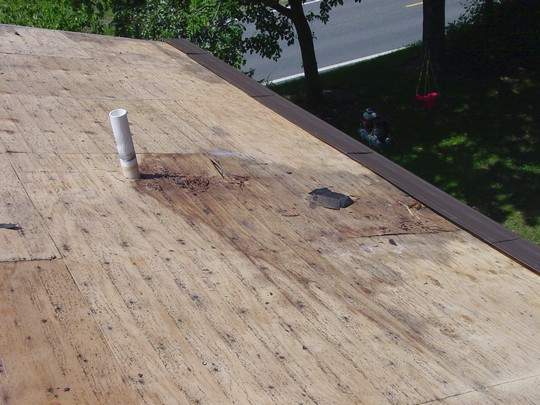
Calling a licensed contractor is the only right way to deal with this issue. At your call, the contractor will have an experienced technician come out to your location, so that the problems can be fixed quickly.
Safety risks come from all directions. The toxic molds that were discussed in other posts on this blog love badly-installed roofs - the warm, dark area is an ideal incubator for that silent killer. Wind on a badly installed roof rips shingles off, and as more than one person has noted: strong winds are not always dangerous for the wind alone, the danger comes from what is carried along with it. Enough storms, with enough shingles ripped off, will cause a leak and damage your home. Moreover, if allowed to get in, rainwater can cause leaks down your walls (that's a part of why the molds are such a huge issue), but even down to your masonry foundations. In short: left long enough, a bad roof will cause a house to destroy itself. It's not a question of whether it will or not - only when.
We at Dream Team are GAF Certified, and any contractor you use should be too. They guarantee the quality of their material, and being certified means that our technicians know exactly how to install it in the best way possible.
Keep your roof in shape, and your home will always be a great place to live!
8/05/2012
Gutters: An essential part of your home.
I don't think our learned readers need a long-winded explanation of what gutters are. But, do you know the difference between a good gutter and a bad gutter? A good gutter protects your home from rain by funneling it away from your roof and into the downspouts. Bad gutters can fall into many categories:
So, what kind of danger are you in with bad gutters? Well, the word "extreme" comes to mind, in big flashing neon letters. Always remember this: your home's enemy number one, with a bullet, is water. Starting from the top, we have: danger to your roof and fascia. Wood & water do not mix in a way that's conducive to your home being a strong and safe place to live. Too much water will cause wood rot, which we'll talk about in more depth in a moment; and it also causes the wood to crack, especially if there is still water when the winter comes and things freeze up. If anyone remembers their science classes, you'll remember that water expands when it freezes - which can cause all sorts of warping and cracking effects on the wood under your roof and the fascia behind the gutter itself.
When you get past the roof itself, water from badly-installed gutters and downspouts can damage your walls, your foundations, and leak into your basement. Once it gets in there, there are a whole host of problems related to the wood rot.
So let's get to the nitty-gritty. The reason for the extreme danger is thus: mold. Water causes mold growth, and warm, dark, places like your roof and basement are the absolutely perfect places for it to grow. Why should you be worried about this? Because even the CDC says,
 And there are some very horrifying kinds of mold, like Black Mold. It will, if untreated, kill you. And while it's killing you, the water and the mold growth are eating away at the wood of your roof, the masonry foundations, and even your walls - in a few short years of mistreatment, your home can be completely unsafe and in fact, deadly for anyone to enter without a hazmat suit on.
Here's an extreme case - each of those polka-dot spots is really a colony of toxic black mold, spewing enough spores to kill a grown person:
And how do you prevent all of this? It's very simple. Twice a year, get your gutters flushed by a professional contractor like Dream Team. So save your home and keep dreaming safely, by calling us at (888)382-2001!
- Badly installed: If the gutters are set at the wrong angle, water will not flow properly to the downspout and runoff will occur at the wrong places.
- Too loose: If water cannot easily run to the gutter, or there is space between the gutter and the wall, there is a danger of water running down from the gutter into the siding - this is very dangerous to your walls and fascia boards. A gutter that pulls away can also do serious damage not only to the board behind, but also the roof it's connected to.
 |
| This is a gutter in real danger! |
- Clogged: Have you ever seen what happens after a beaver dam is built? That happens in your gutters; and if you have trees over them, they can even clog up with frightening regularity. And when it gets bad, if a seed, gets stuck in, something like the image to the right can happen!
- And still more.
So, what kind of danger are you in with bad gutters? Well, the word "extreme" comes to mind, in big flashing neon letters. Always remember this: your home's enemy number one, with a bullet, is water. Starting from the top, we have: danger to your roof and fascia. Wood & water do not mix in a way that's conducive to your home being a strong and safe place to live. Too much water will cause wood rot, which we'll talk about in more depth in a moment; and it also causes the wood to crack, especially if there is still water when the winter comes and things freeze up. If anyone remembers their science classes, you'll remember that water expands when it freezes - which can cause all sorts of warping and cracking effects on the wood under your roof and the fascia behind the gutter itself.
When you get past the roof itself, water from badly-installed gutters and downspouts can damage your walls, your foundations, and leak into your basement. Once it gets in there, there are a whole host of problems related to the wood rot.
So let's get to the nitty-gritty. The reason for the extreme danger is thus: mold. Water causes mold growth, and warm, dark, places like your roof and basement are the absolutely perfect places for it to grow. Why should you be worried about this? Because even the CDC says,
"In 2004 the Institute of Medicine (IOM) found there was sufficient evidence to link indoor exposure to mold with upper respiratory tract symptoms, cough, and wheeze in otherwise healthy people; with asthma symptoms in people with asthma; and with hypersensitivity pneumonitis in individuals susceptible to that immune-mediated condition. The IOM also found limited or suggestive evidence linking indoor mold exposure and respiratory illness in otherwise healthy children."
 And there are some very horrifying kinds of mold, like Black Mold. It will, if untreated, kill you. And while it's killing you, the water and the mold growth are eating away at the wood of your roof, the masonry foundations, and even your walls - in a few short years of mistreatment, your home can be completely unsafe and in fact, deadly for anyone to enter without a hazmat suit on.
Here's an extreme case - each of those polka-dot spots is really a colony of toxic black mold, spewing enough spores to kill a grown person:
And how do you prevent all of this? It's very simple. Twice a year, get your gutters flushed by a professional contractor like Dream Team. So save your home and keep dreaming safely, by calling us at (888)382-2001!
Subscribe to:
Posts (Atom)