Hey everyone!
For those that follow the blog, you'll know that all of October we've been talking about your shingle roof. Without dipping into stuff we're all sure you already know, we've been trying to educate our people about what we see when you call us to give an estimate on your roof. After all, you don't really need us to just tell you the obvious.
This post is meant as a nice wrap-up to it all. Firstly, we answer general questions posted through our Facebook page, our Twitter account, or comments here on the blog. If you have any questions about your home in specific, call us at 888-382-2001 and have one of our trained and experienced technicians come out to your home for a free estimate, where you can ask them anything you want.
Remember that your roof requires seasonal maintenance every few months. In the summer and spring, you have to watch out for heat and rain. In autumn and winter, you have to take care for falling leaves, snow, and other cold-related issues - especially ice dams. Remember to keep your attic at a controlled, even temperature through the use of attic vents and fans.
Your gutters don't exist independently either, requiring periodic cleanings and checks on their general structure to see that they're not a liability to your home.
There are many ways to protect your roof, and no one is more qualified to tell you about those options than a licensed roofer. So call us already!
Showing posts with label heat. Show all posts
Showing posts with label heat. Show all posts


10/07/2012
Roofing Month, Week 2: Ice Dams!
Week 2 of October, and we're looking at a nippy month, but we're still in decent temperatures. But this winter, our homes are going to have a few massive hazards. The worst and foremost amongst these is:
Ice Dams!

The first thing you should do is contact your local roofing contractor. Your roof needs maintenance, and beyond that, contractors have insurances, safety equipment, knowledge, and time that you might not. The simplest fix the contractors have is to take a roof rake and push broom and simply clear the snow off the roof to prevent formation of the dam. Otherwise, the insulation in your roof could be faulty and need repair. And there is one natural, permanent solution.

Now, I'm not going to sit here and argue with you about whether icicles look nice or not. But this collection of them on the side of a house is properly called an ice dam: a ridge of ice that forms at the
edge of a roof and prevents melting snow (water) from draining off the roof. The
water that backs up behind the dam can leak into a home. And we already know what water can do from this summer's posts, don't we?
This whole awful mess gets started when your roof is above freezing at the top (where the runoff begins), and below freezing by the time the water hits the edge (where the dam forms). There are a few solutions to this damaging and dangerous condition for your home.
The first thing you should do is contact your local roofing contractor. Your roof needs maintenance, and beyond that, contractors have insurances, safety equipment, knowledge, and time that you might not. The simplest fix the contractors have is to take a roof rake and push broom and simply clear the snow off the roof to prevent formation of the dam. Otherwise, the insulation in your roof could be faulty and need repair. And there is one natural, permanent solution.
Attic vents and fans help to keep the temperature in your attic even, which in turn keeps your roof temperature even, which prevents ice dams before they can even form.
So, if you're in Westchester or Orange Counties in New York, or anywhere in New Jersey call Dream Team Construction today at our toll-free number, (888)382-2001! Let's keep your home safe before you have to worry!
9/16/2012
What is a Chimney Inspection?
Some of you out there may have heard your local contractors advertising for a free chimney inspection with a chimney sweep. Dream Team does, and so do many others - it's a smart idea, and makes sure that your chimney is at its safest at all times. After all, just last week, you read on this blog about the danger that a sweep can prevent. Inspections can point out serious safety dangers to your home and your family.
There are three levels of inspection, increasing in severity, as defined by the National Fire Protection Association (NFPA), in their standard titled NFPA 211. The NFPA divides the types of inspections three categories, or levels. A Level I inspection is the most basic level of inspection while Level II and Level III inspections are progressively more detailed and comprehensive.
Paraphrasing from that standard and interpretation found online, the levels are pretty much as follows:
Level I
A Level I inspection is the recommended level when an evaluation of the chimney system for continued service is needed and the conditions of use are not changing. Most likely, unless you're changing an appliance for one of the same type, you're likely to receive a Level I chimney inspection during your annual chimney sweep. It's limited to the readily available sections of the chimney, accessible connections, and connected appliances.
Your chimney technician does this for several reasons, but the biggest ones are: see that there is no heat-related damage to the chimney or its connected appliances, ensure that the flue is not constricted or blocked in any way (especially by creosote or other buildups), and to ensure that the exterior of the chimney is sound and functioning properly.
Level II
A Level II inspection is more detailed and thorough than a Level I inspection. It's recommended when conditions of use for the appliance or venting system are changing, or when a Level I inspection reveals the need for a more detailed inspection.
A Level II inspection is required when any changes are made to the system, upon the sale or transfer of a property, or after an operation malfunction or external event that is likely to have caused damage to the chimney. Building fires, chimney fires, earthquakes, and severe weather are all indicators that this level of inspection may be needed. A Level II inspection is a more in-depth inspection.
A Level II inspection includes everything in a Level I inspection, plus the accessible portions of the chimney exterior and interior including attics, crawl spaces and basements. It will also address proper clearances from flammable material in accessible locations. There are no special tools required to open doors, panels or coverings in performing a Level II inspection. A Level II inspection also includes a visual inspection by video scanning or other means in order to examine the internal surfaces and joints of all flue liners incorporated within the chimney. No removal or destruction of permanently attached portions of the chimney or building structure or finish is needed with a Level II inspection.
Level III
When a Level I or Level II inspection suggests a hidden hazard and the evaluation cannot be performed without special tools to access concealed areas of the chimney or flue, a Level III inspection is recommended. A Level III inspection is the most detailed of all of the inspection types and includes inspection of concealed areas of the building. However, examination of concealed areas will be limited to areas reasonably suspected of containing hazards that cannot be evaluated otherwise. A Level III inspection includes all areas covered in a Level I and Level II inspection, plus an inspection of concealed areas, to investigate known or suspected problems.
A Level III inspection includes all the areas and items checked in a Level I and a Level II inspection, as well as the removal of certain components of the building or chimney where necessary. Removal of components (i.e., chimney crown, interior chimney wall) is needed only when necessary - to gain access to areas that are the subject of the inspection. When serious hazards are suspected, a Level III inspection may well be required to determine the condition of the chimney system.
It's kind of a dry read, I know. But by reading through and understanding what it means, you'll learn a little of what your technician needs to do to keep you safe. After all, you do need a safe home to live in - it's the only kind of home where your family can flourish and a point of pride for you and yours.
There are three levels of inspection, increasing in severity, as defined by the National Fire Protection Association (NFPA), in their standard titled NFPA 211. The NFPA divides the types of inspections three categories, or levels. A Level I inspection is the most basic level of inspection while Level II and Level III inspections are progressively more detailed and comprehensive.
Paraphrasing from that standard and interpretation found online, the levels are pretty much as follows:
Level I
A Level I inspection is the recommended level when an evaluation of the chimney system for continued service is needed and the conditions of use are not changing. Most likely, unless you're changing an appliance for one of the same type, you're likely to receive a Level I chimney inspection during your annual chimney sweep. It's limited to the readily available sections of the chimney, accessible connections, and connected appliances.
Your chimney technician does this for several reasons, but the biggest ones are: see that there is no heat-related damage to the chimney or its connected appliances, ensure that the flue is not constricted or blocked in any way (especially by creosote or other buildups), and to ensure that the exterior of the chimney is sound and functioning properly.
Level II
A Level II inspection is more detailed and thorough than a Level I inspection. It's recommended when conditions of use for the appliance or venting system are changing, or when a Level I inspection reveals the need for a more detailed inspection.
A Level II inspection is required when any changes are made to the system, upon the sale or transfer of a property, or after an operation malfunction or external event that is likely to have caused damage to the chimney. Building fires, chimney fires, earthquakes, and severe weather are all indicators that this level of inspection may be needed. A Level II inspection is a more in-depth inspection.
A Level II inspection includes everything in a Level I inspection, plus the accessible portions of the chimney exterior and interior including attics, crawl spaces and basements. It will also address proper clearances from flammable material in accessible locations. There are no special tools required to open doors, panels or coverings in performing a Level II inspection. A Level II inspection also includes a visual inspection by video scanning or other means in order to examine the internal surfaces and joints of all flue liners incorporated within the chimney. No removal or destruction of permanently attached portions of the chimney or building structure or finish is needed with a Level II inspection.
Level III
When a Level I or Level II inspection suggests a hidden hazard and the evaluation cannot be performed without special tools to access concealed areas of the chimney or flue, a Level III inspection is recommended. A Level III inspection is the most detailed of all of the inspection types and includes inspection of concealed areas of the building. However, examination of concealed areas will be limited to areas reasonably suspected of containing hazards that cannot be evaluated otherwise. A Level III inspection includes all areas covered in a Level I and Level II inspection, plus an inspection of concealed areas, to investigate known or suspected problems.
A Level III inspection includes all the areas and items checked in a Level I and a Level II inspection, as well as the removal of certain components of the building or chimney where necessary. Removal of components (i.e., chimney crown, interior chimney wall) is needed only when necessary - to gain access to areas that are the subject of the inspection. When serious hazards are suspected, a Level III inspection may well be required to determine the condition of the chimney system.
It's kind of a dry read, I know. But by reading through and understanding what it means, you'll learn a little of what your technician needs to do to keep you safe. After all, you do need a safe home to live in - it's the only kind of home where your family can flourish and a point of pride for you and yours.
8/26/2012
Your Roof: Essential to your comfort
We at Dream Team are sure that you're aware that the roof at the top of your home is one of the most important parts of the structure. Safety, comfort, value, and curb appeal - all of these things have problems and solutions that can be tied directly to your roof.
A good-looking roof is vivid in color and makes your home stand out against the rest of the neighborhood. A faded, old roof looks dilapidated, and generally makes your home look just old, stale, and tired. You don't want that - and you certainly don't want it when you go to sell!
 Of course, roofs can leak, and we all know that the best material in the world is only as good as the contractor who installs it. You want to make sure you have someone experienced, who understands your home and knows the materials they're working with. The plywood under your roof can be damaged from a number of badly installed parts. For instance, the damage to the right was due to that pipe not being properly sealed, which allowed water in, which caused rotting to the roof and warping of the plywood beneath. It's never a pretty sight, and it's always traumatic to think that your home which provides so much safety and comfort to your and yours could be "that" house on the block.
Calling a licensed contractor is the only right way to deal with this issue. At your call, the contractor will have an experienced technician come out to your location, so that the problems can be fixed quickly.
Safety risks come from all directions. The toxic molds that were discussed in other posts on this blog love badly-installed roofs - the warm, dark area is an ideal incubator for that silent killer. Wind on a badly installed roof rips shingles off, and as more than one person has noted: strong winds are not always dangerous for the wind alone, the danger comes from what is carried along with it. Enough storms, with enough shingles ripped off, will cause a leak and damage your home. Moreover, if allowed to get in, rainwater can cause leaks down your walls (that's a part of why the molds are such a huge issue), but even down to your masonry foundations. In short: left long enough, a bad roof will cause a house to destroy itself. It's not a question of whether it will or not - only when.
We at Dream Team are GAF Certified, and any contractor you use should be too. They guarantee the quality of their material, and being certified means that our technicians know exactly how to install it in the best way possible.
Keep your roof in shape, and your home will always be a great place to live!
A good-looking roof is vivid in color and makes your home stand out against the rest of the neighborhood. A faded, old roof looks dilapidated, and generally makes your home look just old, stale, and tired. You don't want that - and you certainly don't want it when you go to sell!
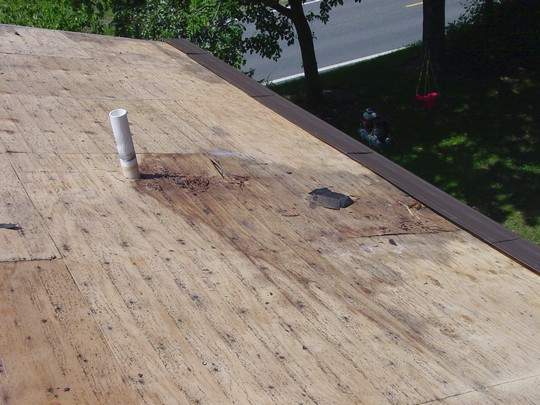
Calling a licensed contractor is the only right way to deal with this issue. At your call, the contractor will have an experienced technician come out to your location, so that the problems can be fixed quickly.
Safety risks come from all directions. The toxic molds that were discussed in other posts on this blog love badly-installed roofs - the warm, dark area is an ideal incubator for that silent killer. Wind on a badly installed roof rips shingles off, and as more than one person has noted: strong winds are not always dangerous for the wind alone, the danger comes from what is carried along with it. Enough storms, with enough shingles ripped off, will cause a leak and damage your home. Moreover, if allowed to get in, rainwater can cause leaks down your walls (that's a part of why the molds are such a huge issue), but even down to your masonry foundations. In short: left long enough, a bad roof will cause a house to destroy itself. It's not a question of whether it will or not - only when.
We at Dream Team are GAF Certified, and any contractor you use should be too. They guarantee the quality of their material, and being certified means that our technicians know exactly how to install it in the best way possible.
Keep your roof in shape, and your home will always be a great place to live!
8/12/2012
Keep cool! In your attic, at least
Hello again!
Most people know that heat rises. Most people also know that at the top of your home are usually asphalt shingles on top of wood - both of which absorb heat in your attic. And when your attic is hot, it comes down through your chimney, your walls, and into your living spaces. There are two ways to keep your attic cool - vents and fans. Ventilation is a passive process that causes cooler air to come into your attic and keep the hot air out. The image below can show you better than I can tell you. If you notice, not only is your attic a full 25 degrees cooler, your living space is actually 15 degrees cooler - naturally! And every degree you can cool naturally is one more degree that you don't have to cool with electricity.

Now, an attic fan is a more heavy-duty solution. As the name implies, it's a fan on the top of your house, that makes the attic even cooler still. As you can see, with a fan, it's even cooler than venting alone, and keeps your home cooler constantly.

And if you're worried about the energy draw of the attic fan on your home, there's a great solution: solar attic fans! With one of those in your home, you're not drawing any energy - in fact, you can sometimes give a little energy back to the grid - just like a regular solar panel on your roof. You're using the sun to cool your home, in a great "take that" to Nature!
Most people know that heat rises. Most people also know that at the top of your home are usually asphalt shingles on top of wood - both of which absorb heat in your attic. And when your attic is hot, it comes down through your chimney, your walls, and into your living spaces. There are two ways to keep your attic cool - vents and fans. Ventilation is a passive process that causes cooler air to come into your attic and keep the hot air out. The image below can show you better than I can tell you. If you notice, not only is your attic a full 25 degrees cooler, your living space is actually 15 degrees cooler - naturally! And every degree you can cool naturally is one more degree that you don't have to cool with electricity.

Now, an attic fan is a more heavy-duty solution. As the name implies, it's a fan on the top of your house, that makes the attic even cooler still. As you can see, with a fan, it's even cooler than venting alone, and keeps your home cooler constantly.

And if you're worried about the energy draw of the attic fan on your home, there's a great solution: solar attic fans! With one of those in your home, you're not drawing any energy - in fact, you can sometimes give a little energy back to the grid - just like a regular solar panel on your roof. You're using the sun to cool your home, in a great "take that" to Nature!
Subscribe to:
Posts (Atom)